











ABOUT NERHA
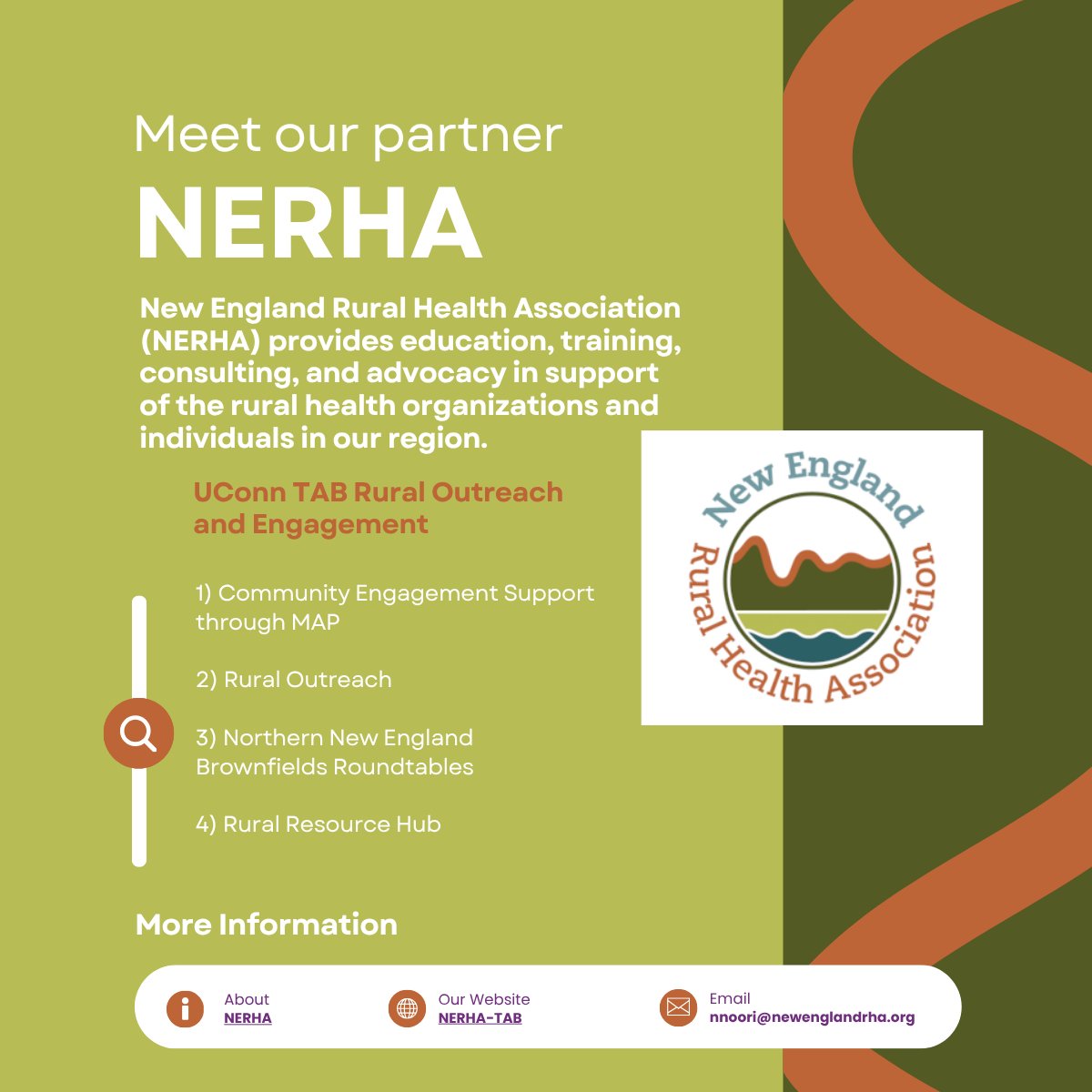
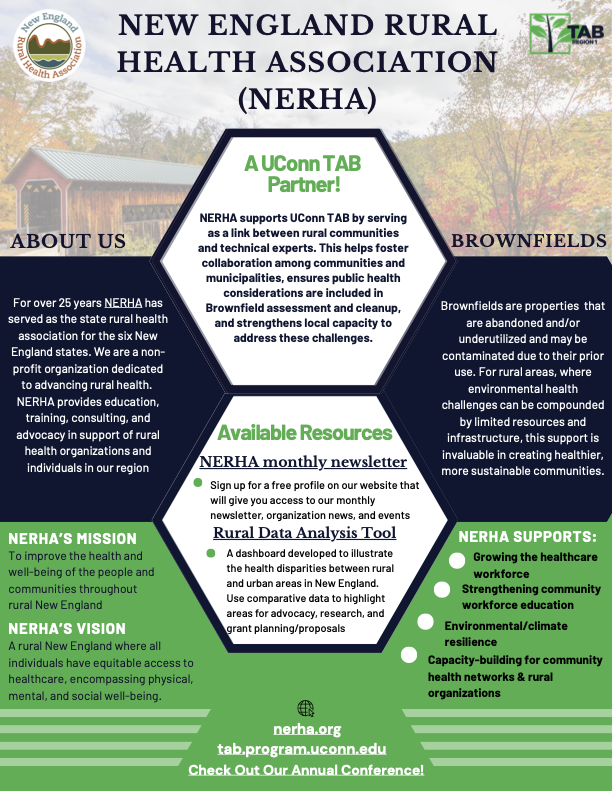
NERHA Initiatives:
- Northern NE roundtables (see state pages for PDFs)
- Community Engagement Projects and Resources
- Rural Programming Outreach
Contact information:
Nylab Noori | Environmental Health Associate Program Manager (nnoori@newenglandrha.com)
ABOUT GROW AMERICA
 The Grow America Brownfields Revolving Loan Fund Technical Assistance Provider (RLF TAB) is a nationwide, no-cost technical assistance program funded by the U.S. Environmental Protection Agency (EPA) to support organizations involved with EPA Brownfields Revolving Loan Fund (RLF) Grants. The program helps communities build capacity, increase understanding of RLF requirements, and improve long-term program performance.
Who it serves:
- Existing and prospective EPA Brownfields RLF Grant recipients
- Communities and organizations interested in establishing or strengthening RLF programs
- Grantees in current or post-closeout RLF status
Key services and supports include:
- Program Guidance & Capacity Building
• Help understand the unique features, requirements, and lifecycle of EPA RLF Grants — from grant setup through long-term management. - Training and Learning Opportunities
• In-person and virtual peer-to-peer exchanges
• Cohort training programs for existing grantees
• Workshops and seminars focused on maximizing RLF impact and effectiveness. - Networking & Community of Practice
• Access to an online portal with resources and forums
• Peer networking with other RLF grantees and practitioners
• Opportunities to share best practices, challenges, and solutions. - Outreach & Events
• Engagement through listening sessions, advisory committees, and sessions associated with national brownfields events.
Grow America implements this technical assistance in partnership with the International City/County Management Association (ICMA) as part of EPA’s broader investment in brownfields revitalization, aiming to enhance local capacity to leverage RLF financing for environmental cleanup and community redevelopment.
Resources:
ABOUT BFJT Technical Assistance

The EPA’s Brownfields Job Training (BFJT) Technical Assistance, delivered by Tetra Tech and Adaapta through a contract with EPA, helps communities build the capacity needed to successfully implement EPA BFJT Grants.
EPA’s Brownfields and Land Revitalization Program empowers states, Tribal Nations, and local communities to assess, safely clean up, and sustainably reuse contaminated properties. The BFJT Program provides grants to eligible organizations to recruit, train, and place unemployed or underemployed residents in environmental careers, equipping them with the skills needed for full-time, sustainable employment. By building a skilled local workforce, BFJT programs enable communities historically affected by economic disinvestment, health disparities, and disproportionate and adverse exposures to environmental contamination to directly benefit from brownfield cleanup and redevelopment.
BFJT Technical Assistance helps communities:
- Understand EPA BFJT Grant requirements
- Design and implement workforce training programs aligned with local employer needs
- Build partnerships with workforce boards, employers, and community organizations
- Navigate grant management and reporting requirements
- Strengthen long-term program sustainability and job placement outcomes
EPA Job Training Grant funds support training related to facilitating the inventory of brownfield sites, site assessments, remediation of brownfield sites, community involvement, or site preparation, such as:
- Hazardous waste operations and emergency response (HAZWOPER) (mandatory)
- Green remediation technologies, green infrastructure, and stormwater management
- Emergency planning, preparedness, and response training for emergencies leading to contamination on brownfield sites
- Enhanced environmental health and safety related to site remediation
- Assessment, inventory, analysis, and remediation of brownfield sites
- Use of techniques and methods for cleanup of hazardous substances
- Environmental stewardship awareness
- Strategies for environmental mitigation, adaptation, or resiliency
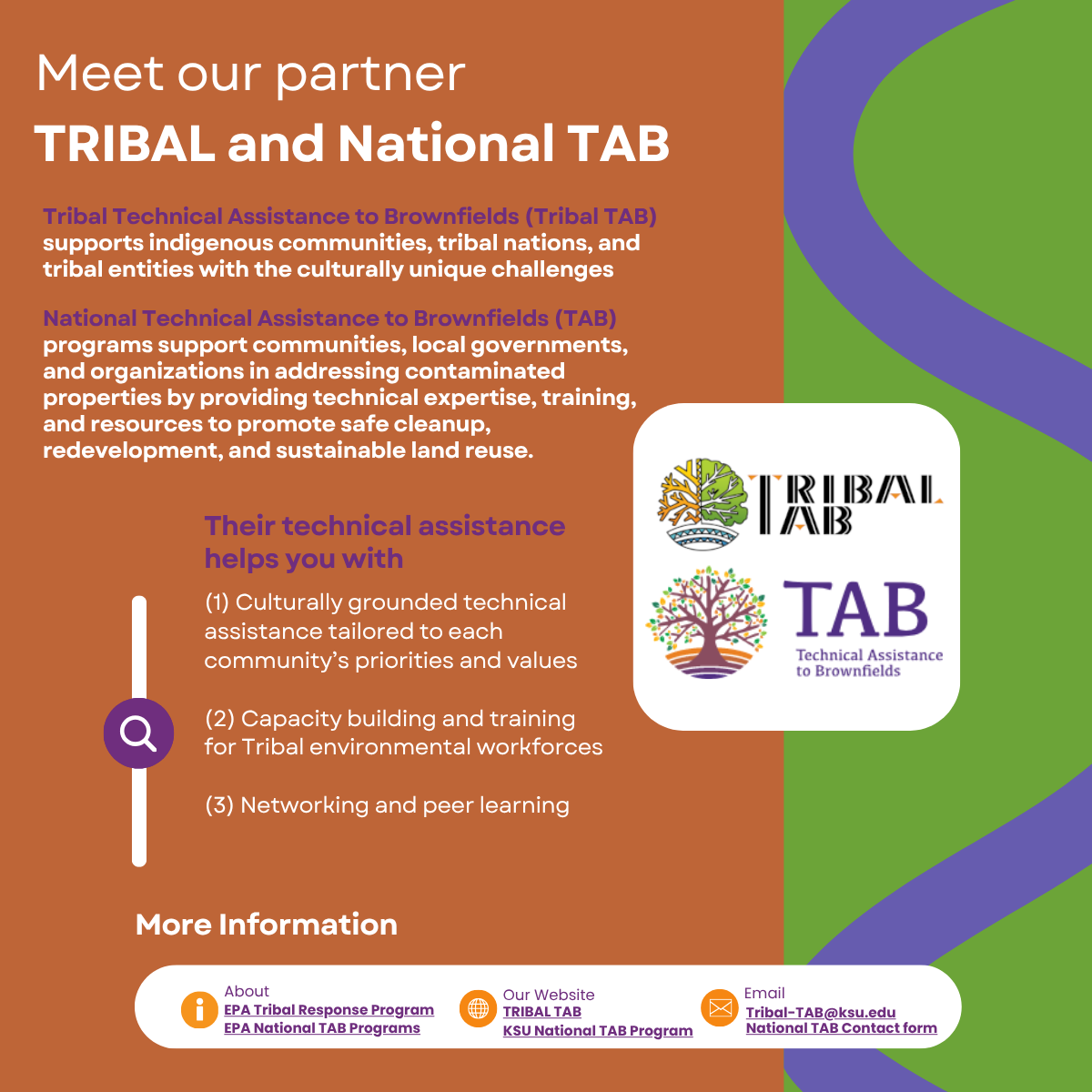
ABOUT TRIBAL and NATIONAL TAB
KSU TAB
The Kansas State University TAB is a free, EPA-funded technical assistance program that helps communities address brownfields. The program provides expert guidance, tools, and resources to support brownfields assessment, cleanup, and redevelopment, helping communities plan and implement sustainable site reuse.
Who We Serve:
- Local governments and municipalities
- Community organizations
- Redevelopment agencies and planners
What We Offer:
- Help with identifying and prioritizing brownfield sites
- Strategic planning and redevelopment visioning
- Education and community outreach
- Economic feasibility and sustainability analysis
- Identification of potential funding sources
- Guidance in finding and contracting with environmental firms
- Independent review and summary of technical documents
- Community outreach liaison between you, state or federal agencies, or other entities
National KSU TAB helps communities safely address environmental challenges, revitalize underused properties, and promote sustainable local development.