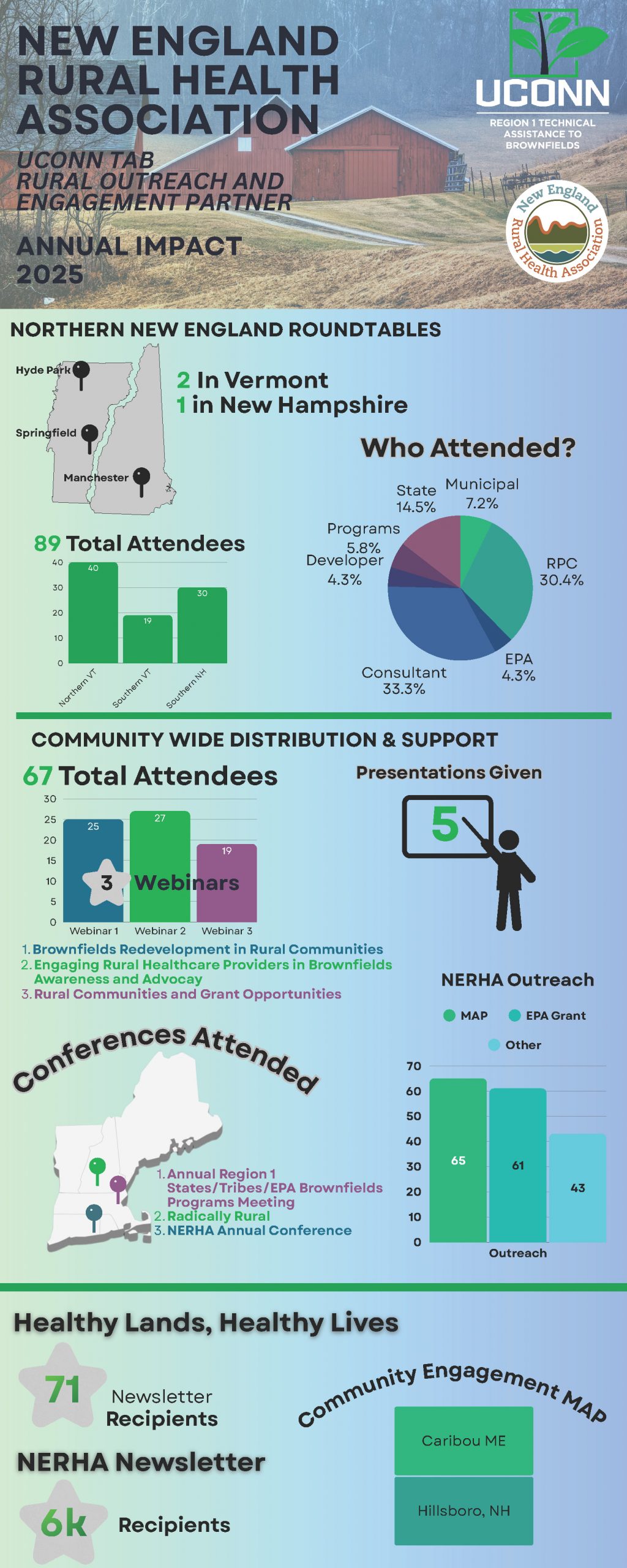
Who is NERHA?
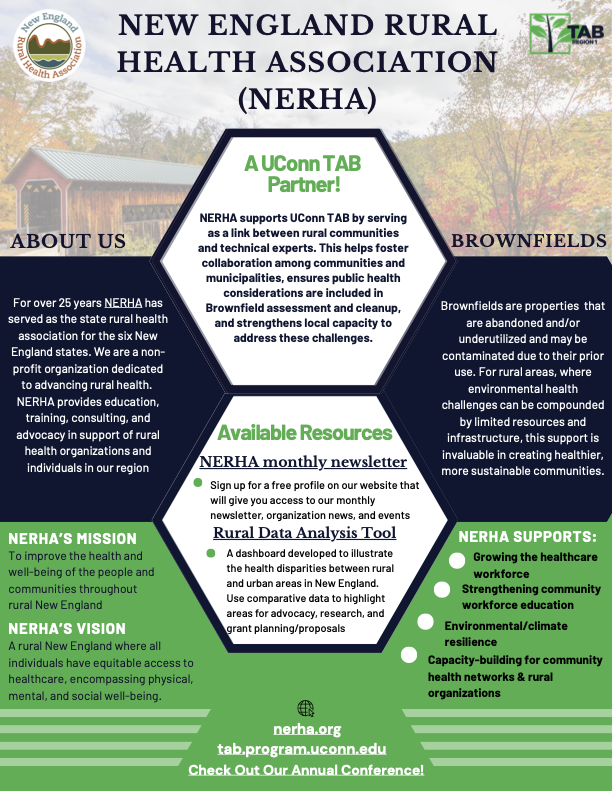
The New England Rural Health Association (NERHA), previously known as the New England Rural Health Roundtable, was established in 1997, with funding from the National Rural Health Association (NRHA). NERHA is committed to improving the health and well-being of rural communities throughout the six New England states of Connecticut, Massachusetts, Maine, New Hampshire, Rhode Island, and Vermont.
What does NERHA do?
NERHA is unique as the only regional rural health association in the country, enabling the sharing of learning and best practices across all six states. NERHA has a wide variety of members across all sectors of healthcare professions, stakeholders, and the community, including Rural Health Clinics, Critical Access Hospitals, community health centers, behavioral health and substance use, oral health/dental, social services, community-based organizations, academic institutions, and individuals who are passionate about rural health.
NERHA works with rural communities across New England to support healthy redevelopment, community-driven planning, and environmental health education related to brownfields and contaminated sites.
More Details:

By Population Size
- Defined by how many people live there
- Small towns or communities with low population
- Depends on definition: Often fewer than 2,500–50,000 people
By Population Density
- Measure of population per square mile
- Rural Areas have smaller population densities
- More open land, farms, forests, or natural areas

By Distance From Urban Centers & Resources
- Defined by how far a place is from a city or metropolitan area
- Limited access to major hospitals, universities, or large job centers
- Homes, businesses, and services are physically farther apart
- Longer travel times for basic services